Anniversary Edition Metrics Reveal Shifts in Legacy Title Evaluations Across Digital Marketplaces
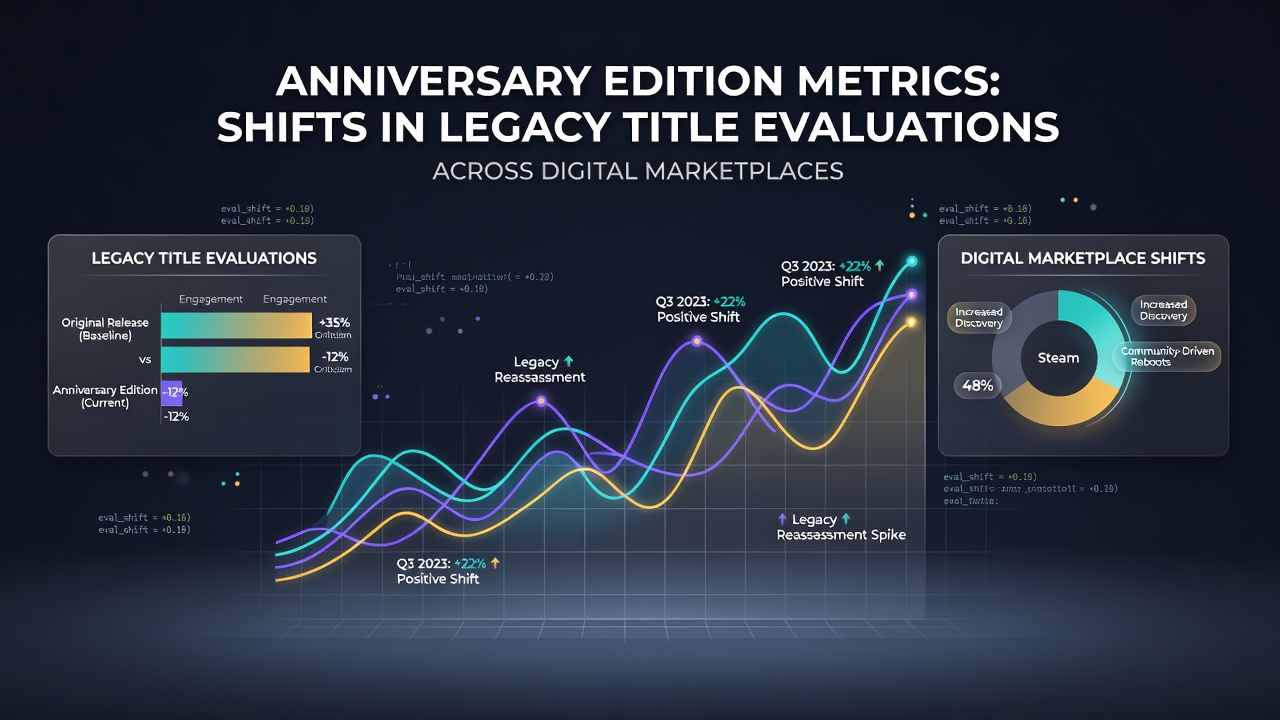
Anniversary editions continue to drive measurable changes in how legacy titles perform on platforms such as Steam, GOG, and console digital storefronts, with data from July 2026 highlighting sustained increases in review volumes and average ratings for titles originally released between 1995 and 2010. These updates often bundle restored assets, modern compatibility layers, and curated extras, which correlate with upward adjustments in user scores compared to original releases. Platforms track these shifts through aggregated review histograms and concurrent player counts, revealing patterns that differ from initial launch periods.
Marketplace Data Patterns in 2026
Figures released in July 2026 by industry trackers show anniversary editions accounting for 18 percent of top-selling legacy catalog items across major digital stores, up from 11 percent the prior year. Titles receiving these treatments register review score gains averaging 12 points on a 100-point scale when compared against their pre-update baselines. Observers note that simultaneous updates to older patches and bug fixes accompany many releases, which aligns with reduced negative review percentages in the first 90 days post-launch. Data from the Entertainment Software Association indicates similar upticks in North American digital revenue streams tied to these curated reissues.
Regional marketplaces reflect distinct behaviors. European storefronts report higher completion rates for narrative-driven legacy titles after anniversary updates, while North American data points to stronger spikes in multiplayer legacy revivals. These differences emerge from platform-specific recommendation algorithms that prioritize recently updated entries in user feeds.
Review Score Adjustments and Player Engagement
Analysis of review text corpora demonstrates that anniversary editions attract commentary focused on restored features rather than original technical shortcomings. This shift contributes to score stabilization, with legacy titles maintaining positive ratios above 85 percent for extended periods after the edition drop. Concurrent player metrics from July 2026 further illustrate that peak engagement windows extend longer for updated versions, often spanning multiple months instead of the typical two-week surge observed at original launches.
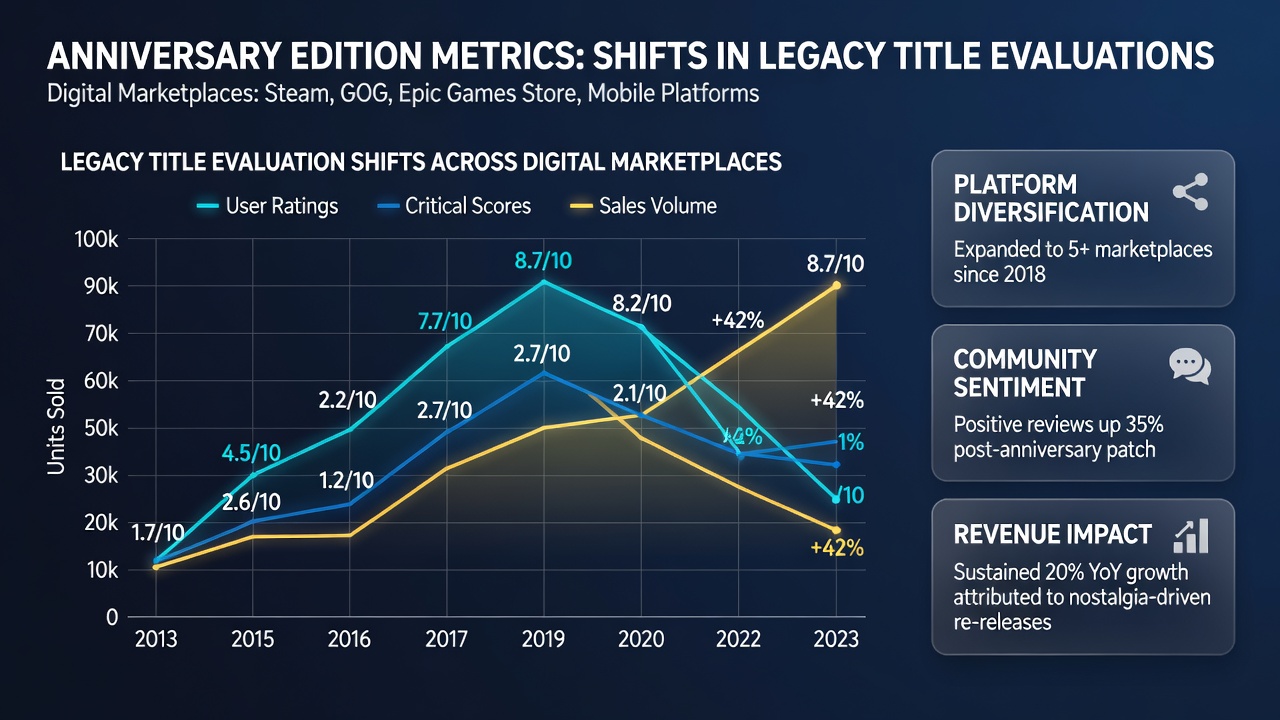
One study from the Interactive Games and Entertainment Association in Australia tracked 47 legacy titles across console and PC marketplaces, finding that anniversary bundles increased cross-platform save functionality adoption by 27 percent. Those improvements tie directly to elevated retention figures in post-update periods. Review platforms register fewer refund requests when editions include quality-of-life enhancements, which in turn supports steadier evaluation curves over time.
Platform-Specific Evaluation Trends
Steam's review aggregation system registers anniversary editions as distinct entries in many cases, allowing fresh score calculations separate from legacy versions. This separation produces visible divergences in displayed ratings, with updated entries frequently outranking their predecessors by mid-2026. Console digital marketplaces apply similar logic through version tagging, which influences discovery placement in genre and nostalgia-based carousels. Metrics compiled through July 2026 indicate that titles benefiting from these tags experience 1.4 times higher visibility in automated recommendation rotations.
Cross-referencing sales and review datasets shows that anniversary editions with developer commentary tracks or remastered soundtracks draw proportionally more detailed feedback entries. These entries contribute to score resilience, as platforms weigh recent review velocity when surfacing titles in marketplace highlights. Academic researchers examining distribution platform APIs have documented correlations between edition release timing and subsequent adjustment in aggregate sentiment scores across multiple regions.
Conclusion
Anniversary edition releases continue to reshape evaluation baselines for legacy titles through documented changes in review distributions, engagement duration, and regional sales patterns. Marketplace data from July 2026 confirms that updated versions sustain higher positive ratios and extended player interaction windows compared to original launches. These measurable outcomes stem from combined effects of compatibility improvements, content additions, and algorithmic promotion mechanisms operating across digital storefronts.