Decoding Viewer Engagement Stats from Launch Streams and Their Link to Subsequent Update Prioritization
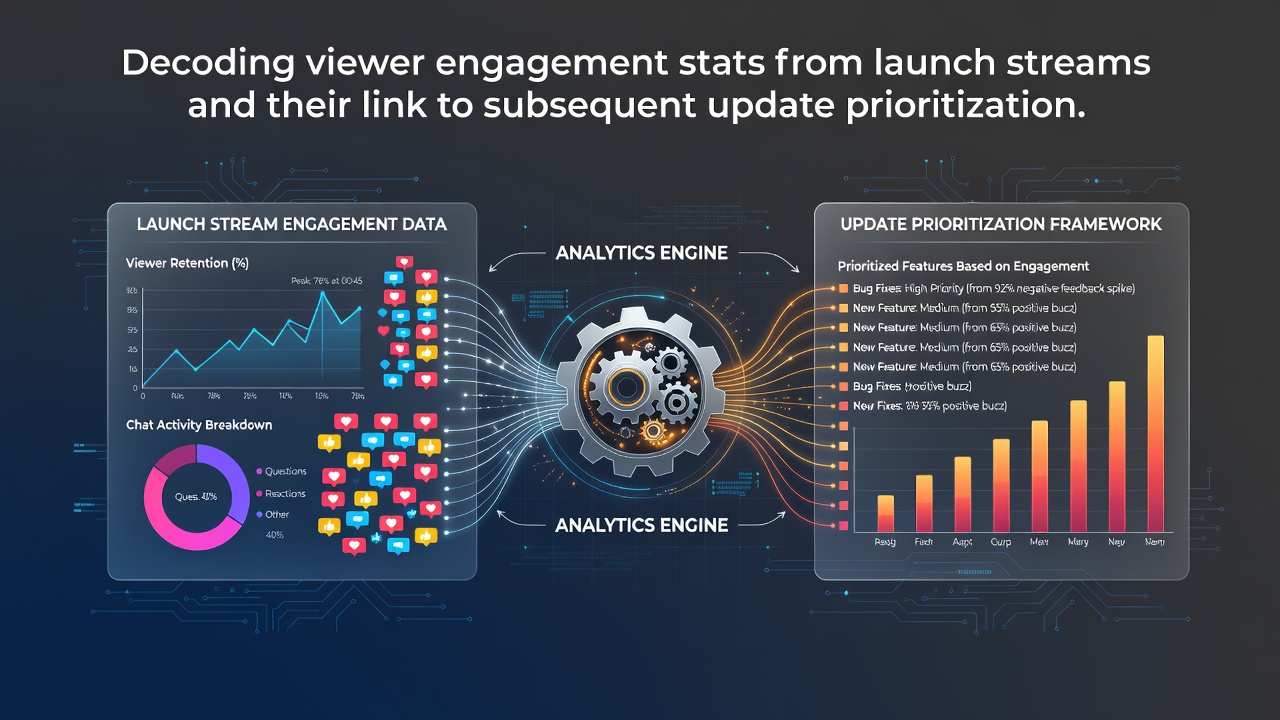
Launch streams on platforms like Twitch and YouTube have become central data sources for tracking how audiences interact with new titles in real time, and developers now routinely examine these metrics to determine which features receive priority in post-release patches. Viewer counts, average watch duration, chat message volume, and concurrent peak moments provide quantifiable signals that teams compare against internal telemetry to refine development roadmaps. According to data compiled by the Entertainment Software Association, launch-day streams accounted for over 40 percent of initial player exposure in major releases tracked through 2025, creating a direct feedback loop between broadcast performance and engineering decisions.
Measuring Engagement During Launch Windows
Analysts break down stream data into several core categories that correlate with player retention patterns observed after release. Peak concurrent viewers indicate initial hype levels, yet sustained watch time and chat sentiment analysis often prove more predictive of which gameplay systems require immediate attention. Researchers at the University of Southern California noted in a 2025 study that titles generating above-average chat activity around specific mechanics, such as inventory management or combat pacing, saw those elements addressed in updates within the first 30 days at higher rates than titles without similar spikes. Drop-off points, where viewers leave streams, frequently align with reported friction areas that later appear in patch notes, giving studios a visual map of potential problem zones before widespread player complaints accumulate.
Data Integration with Internal Metrics
Studios combine stream statistics with server-side telemetry to prioritize updates, creating a layered approach that balances public visibility against actual usage patterns. High engagement segments during launch broadcasts often highlight content creators' choices, such as extended exploration or multiplayer sessions, which then influence which modes receive balance adjustments first. In June 2026, multiple live-service titles adjusted their quarterly update schedules after reviewing stream archives from their initial release windows, focusing resources on systems that maintained viewer attention longest. This method allows teams to allocate limited development bandwidth toward changes that demonstrably affect both broadcast performance and long-term player activity.
What's interesting is how chat logs serve as an early warning system for localization and accessibility issues that surface during global launches. Viewers frequently type questions or complaints in real time, and natural language processing tools now parse these exchanges to flag recurring themes. European research groups affiliated with the Interactive Software Federation of Europe have documented cases where regional language streams revealed subtitle timing problems that later received priority fixes in patches distributed across console and PC platforms.
Case Patterns in Update Sequencing
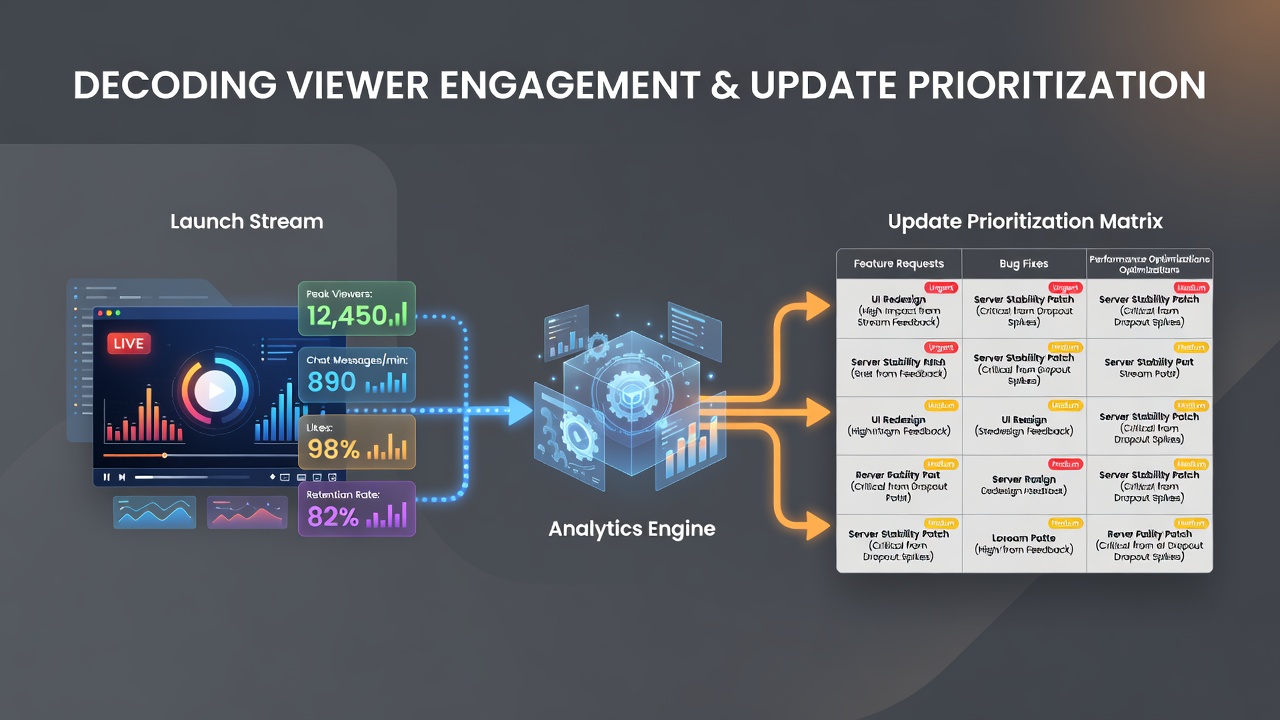
Multiple titles released between late 2025 and early 2026 illustrate how stream-derived insights reshape update order. One action game saw its vehicle handling system elevated in the first major patch after launch streams showed repeated viewer exits during driving sequences, while another title fast-tracked co-op improvements following extended audience retention during group play segments. Observers note that these correlations hold across genres, with narrative-driven experiences using dialogue engagement spikes to guide voice-over or quest adjustments. The pattern suggests that broadcast visibility amplifies certain player pain points, prompting studios to address them before broader community forums dominate the conversation.
Teams also track creator-specific metrics, such as how long particular streamers maintained audiences on experimental features, because these sessions often preview content that later becomes focal points for community discussion. Data from these targeted streams helps prioritize quality-of-life changes that keep both casual viewers and dedicated players engaged across subsequent updates. In practice, this means features that perform well under live scrutiny receive iterative support, whereas underperforming systems may be deprioritized or reworked more aggressively.
Industry Tools and Methodologies
Specialized analytics platforms now aggregate stream data across multiple services, applying machine learning models to predict which metrics most reliably forecast patch impact. These tools cross-reference viewer retention curves with post-launch download and playtime figures, allowing producers to test hypotheses about update sequencing before committing resources. Academic papers from Canadian research institutions have examined similar datasets, confirming that launch stream engagement remains a leading indicator for the types of content that appear in the first two major patches of live-service titles. The methodology continues to evolve as platforms introduce new interaction features, such as real-time polls and clip sharing, which add additional layers of quantifiable feedback.
Conclusion
Stream engagement statistics have moved from supplementary marketing tools to structured inputs that directly influence how development teams sequence updates after launch. By examining viewer duration, chat activity, and retention patterns alongside internal telemetry, studios identify priority areas with greater precision. Continued refinement of these analytical approaches will likely expand their role in shaping patch strategies across platforms, providing a measurable bridge between initial broadcast reception and ongoing content support.