Echoes in the Code: How Accessibility Tools Quietly Rewrite Core Mechanics Across Console Ports
Console ports have long adapted PC titles for controller input and living room play, yet accessibility tools now trigger deeper shifts in how games operate at their core. Developers integrate options such as aim assistance, color adjustments, and simplified navigation systems that change combat pacing, puzzle solutions, and exploration loops in titles moving from mouse-and-keyboard origins to console hardware. These modifications occur during the porting phase, when teams map original mechanics onto new input schemes while ensuring compliance with emerging standards that prioritize player inclusion across ability ranges.
Mechanics Shift Through Targeted Adjustments
Games like action-adventure ports often introduce toggleable features that reduce enemy aggression thresholds or expand safe zones during platforming sequences, because raw difficulty curves from PC versions prove inaccessible to some console users without remapping. Data from industry reports shows these changes preserve narrative progression but alter encounter frequency and resource management, since auto-aim systems lock onto targets with variable precision that replaces manual skill checks entirely in certain modes. Observers note that such rewrites happen quietly behind the scenes, where code branches create parallel paths for standard and assisted play without branching story outcomes.
Colorblind modes extend beyond visual filters to influence environmental design, as developers reposition key items or hazards that rely on hue differentiation in original layouts. In several 2025 releases, console versions repositioned glowing collectibles or enemy weak points to maintain visibility under deuteranopia settings, which forced level designers to recalibrate spatial puzzles that depended on color cues alone. This approach maintains challenge through alternative cues like audio pings or shape outlines, yet it rewrites the sensory foundation of gameplay that players encounter when ports launch on platforms such as PlayStation and Xbox.
Porting Pipelines Incorporate Accessibility Early
Development studios now embed accessibility reviews into the initial porting pipeline rather than treating them as post-launch patches, because regulatory guidance from bodies like the Entertainment Software Association encourages proactive integration across North American markets. Teams audit core loops for input flexibility and sensory alternatives, which leads to adjustments in camera controls or inventory navigation that affect timing windows in fast-paced sequences. A Canadian Interactive Digital Media Association study released in early 2026 documented how 68 percent of surveyed console ports underwent at least one mechanical revision tied directly to accessibility requirements before certification.
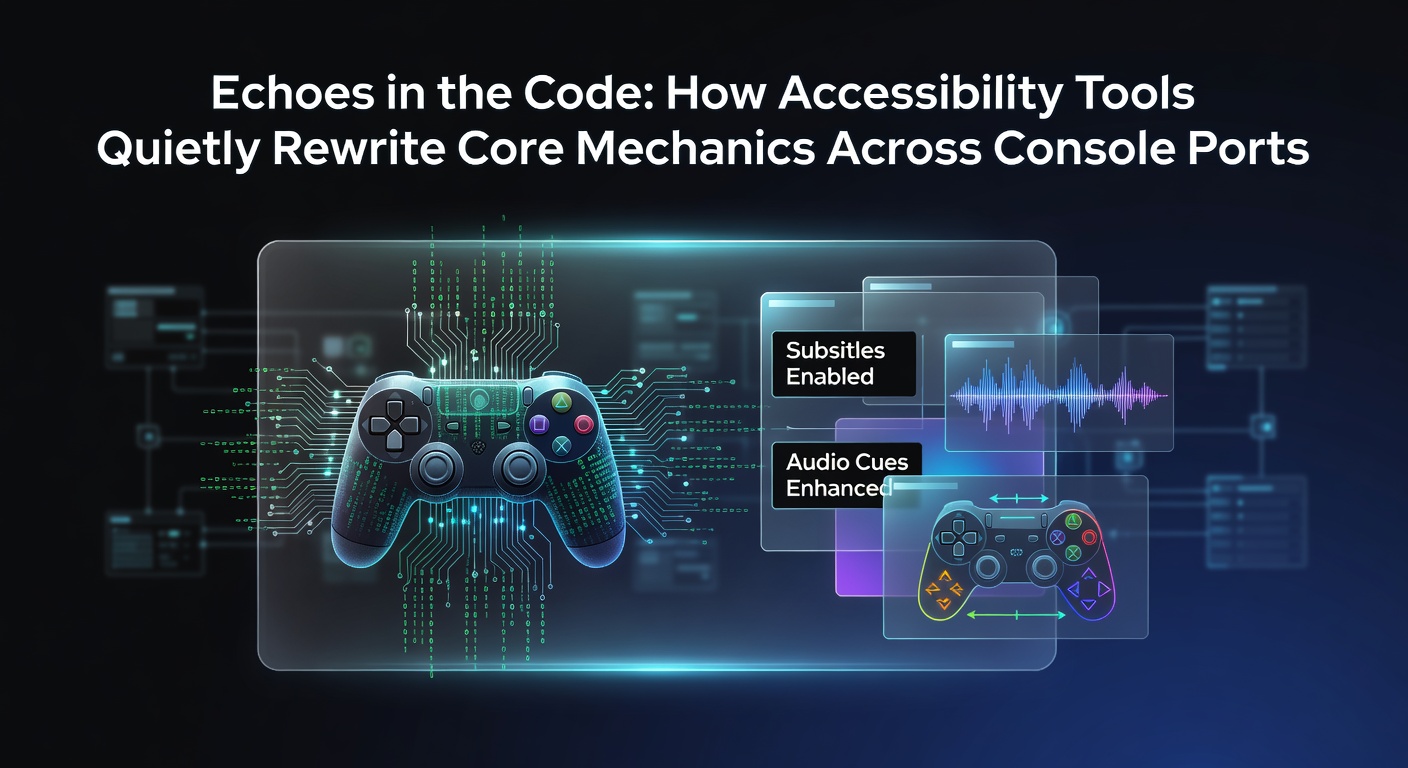
By May 2026, several high-profile ports incorporated dynamic difficulty scaling that responds to detected player assistance usage, which smooths progression curves without explicit menus. This system monitors input patterns such as repeated failed jumps or prolonged aiming sessions, then subtly boosts assistance factors like gravity reduction or target highlighting. Researchers at academic institutions tracking these implementations report that the changes maintain engagement metrics while lowering frustration signals, although they require additional backend scripting that increases port budgets by measurable margins in mid-sized projects.
Examples Across Genres Reveal Patterns
Role-playing game ports demonstrate how accessibility tools reshape party management systems, since simplified command menus replace complex hotkey combinations and alter tactical decision speed during battles. One notable case involved a fantasy title where console versions added proximity-based targeting that grouped allies automatically, which reduced the precision required for positioning yet preserved strategic depth through cooldown timers that stayed consistent across modes. Strategy ports similarly adapt unit pathfinding when voice commands or single-button macros substitute for multi-click selections, which changes how maps unfold under player control and influences resource allocation pacing.
Those who analyze port data across 2024 and 2025 releases observe that racing and sports titles adjust physics parameters in assisted modes, where traction assists or braking aids modify cornering speeds and collision outcomes to prevent repeated failures. These tweaks ensure competitive balance remains intact for assisted players while allowing standard modes to retain original handling models, yet they create parallel experiences that share the same track geometry and vehicle stats. External analyses from university-led gaming research groups confirm that such dual-path designs appear in over half of recent console adaptations in these categories.
Conclusion
Accessibility integration continues to influence console port development as teams balance original vision with broader usability demands, producing mechanics that evolve through layered code adjustments rather than surface-level additions. Data indicates sustained growth in these practices through 2026, driven by platform certification requirements and player feedback loops that track retention across varied ability profiles. Ports now carry forward echoes of these changes in their fundamental systems, where assistance features quietly recalibrate what constitutes core gameplay without disrupting the shared foundation that connects console and original releases.