How In-Game Economy Fluctuations Guide Narrative Expansion Choices in Live Service Titles Across Platforms
Freya Foster · Aug 25, 2026
How In-Game Economy Fluctuations Guide Narrative Expansion Choices in Live Service Titles Across Platforms
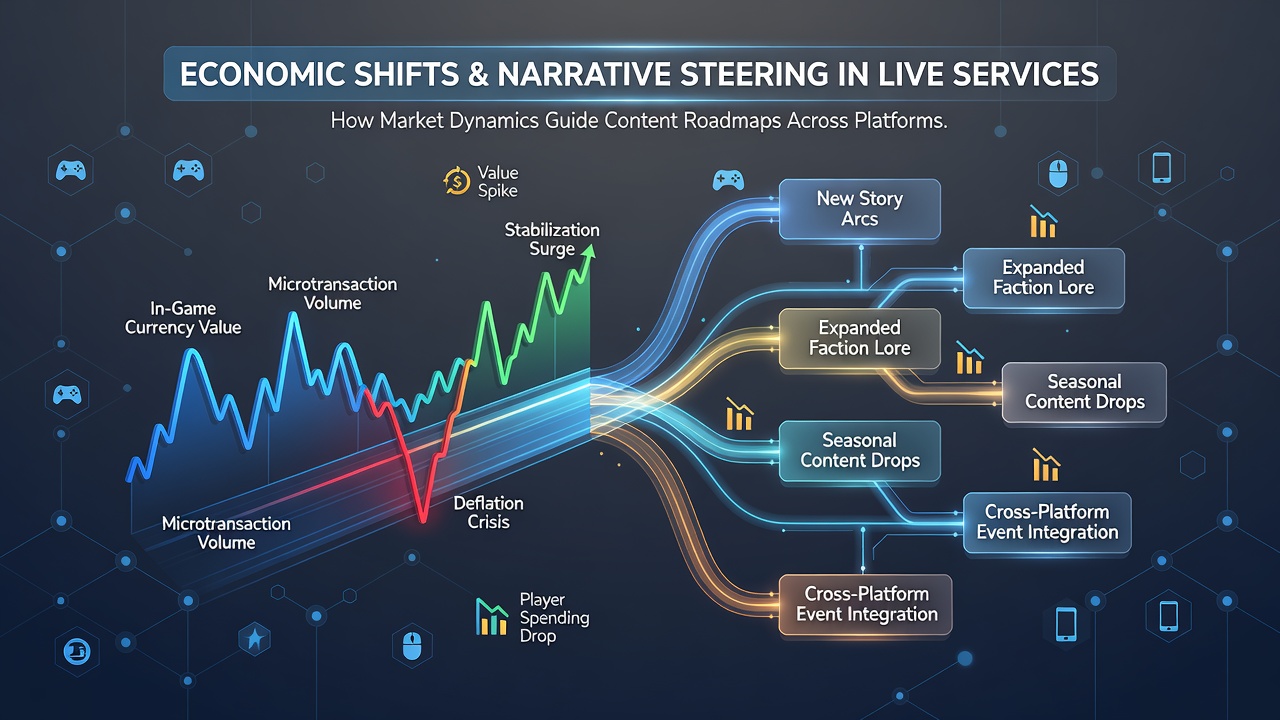
Live service titles operate on persistent worlds where virtual currencies, microtransaction volumes, and player retention metrics intersect with story development pipelines, and developers track these variables to decide when new narrative chapters launch on PC, console, and mobile simultaneously. Economic signals such as sudden drops in premium currency purchases often prompt teams to accelerate limited-time story events that re-engage spending patterns, while sustained high revenue from battle passes can delay paid story expansions in favor of free narrative updates that maintain broader platform parity.
Platform Differences in Economic Data Collection
Console ecosystems generate telemetry through closed networks that report weekly active users and item transaction logs directly to publishers, whereas mobile platforms supply granular daily revenue breakdowns segmented by region and device type, and PC storefronts contribute additional layers through mod support and third-party marketplace activity. These varied data streams converge in central dashboards where analysts compare currency inflation rates across platforms before greenlighting narrative branches that require synchronized voice-over recordings and localization work. When mobile markets show sharp declines in gacha-based spending, teams frequently shift mobile-first story content toward console and PC releases that carry higher average transaction values, a pattern observed in titles maintaining cross-generation support.
Key Economic Indicators That Trigger Narrative Adjustments
Revenue per user figures, virtual item velocity, and seasonal event participation rates serve as primary triggers, because sustained drops in any metric correlate with reduced player investment in ongoing storylines. Teams monitor exchange rates between premium and earned currencies to detect when players begin hoarding resources instead of purchasing expansions, prompting adjustments such as bundling new narrative missions with existing battle pass rewards. Data released during August 2026 highlighted how several major live service projects recalibrated expansion schedules after observing a 12 percent quarter-over-quarter decline in cross-platform currency purchases, leading to earlier integration of mobile-exclusive story arcs into console versions.
Developers also examine regional purchasing power fluctuations, because currency devaluations in one territory can depress overall engagement and force narrative pacing changes that favor shorter, repeatable quests over lengthy single-player campaigns. Studies from research institutions in Canada and the European Union have documented these correlations through anonymized transaction datasets shared under industry partnerships.
Case Examples Across Multiple Titles and Platforms
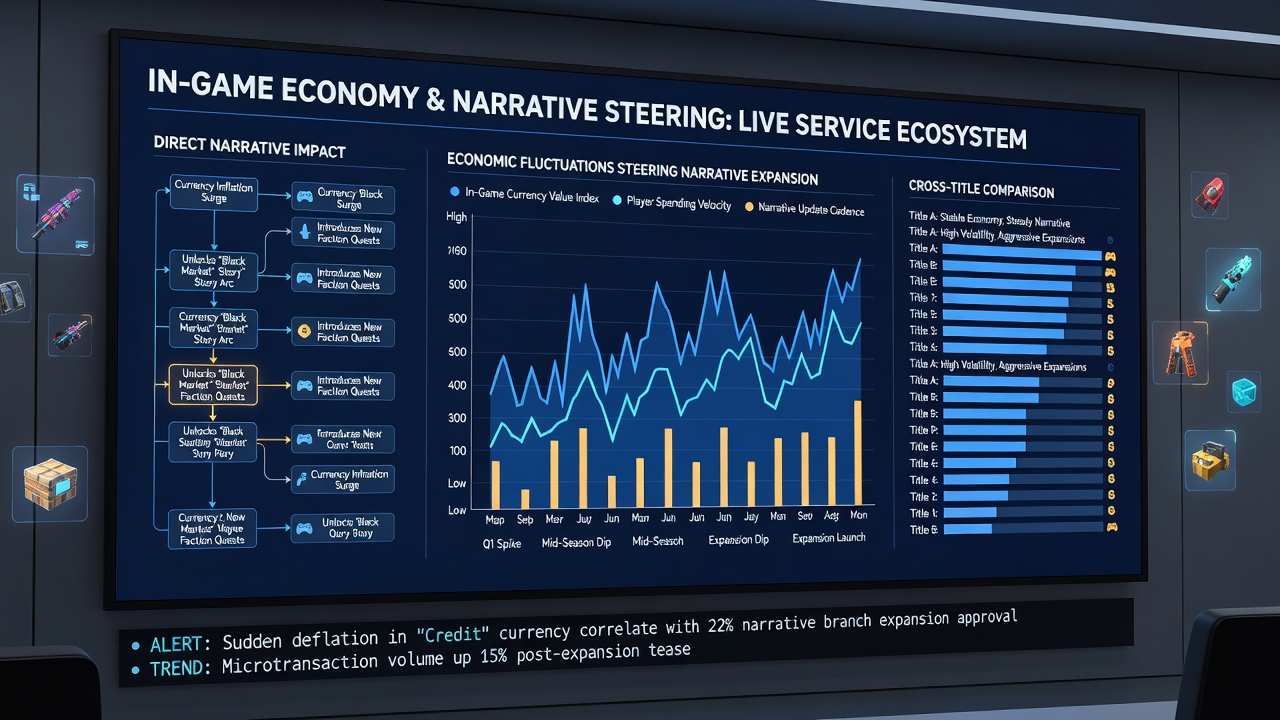
One widely cited example involves a science-fiction multiplayer game that introduced a new story season immediately following a mobile revenue spike attributed to regional promotional events, while the same season arrived later on consoles where economic indicators remained stable. Another instance shows a fantasy action title that converted planned paid narrative DLC into free updates after PC marketplace data revealed players redirecting funds toward cosmetic bundles instead. These decisions reflect coordinated responses across development studios that maintain separate platform teams yet share unified economic forecasting models.
Observers note that narrative expansion timing frequently aligns with platform-specific sales cycles, such as console holiday bundles or mobile app store featured placements, because these periods produce predictable surges in player acquisition that justify new story investments. When acquisition costs rise without corresponding revenue growth, teams often consolidate narrative content into smaller, more frequent updates that reduce overall production expenses while preserving engagement across all supported platforms.
Coordination Challenges in Cross-Platform Development
Live service studios maintain dedicated economy and narrative working groups that meet weekly to review aggregated metrics, because misaligned release dates can create arbitrage opportunities where players migrate between platforms to exploit pricing differences. Synchronization requires careful calibration of story beats so that mobile players receive the same core narrative progression as console users, even when economy models differ in their reliance on gacha mechanics versus direct purchases. Reports from industry associations in Australia and Japan underscore how these coordination efforts have grown more complex with the addition of cloud-streaming services that introduce yet another layer of transaction data.
Resource allocation models now incorporate predictive algorithms that forecast narrative expansion viability based on six-month rolling averages of currency circulation rates, allowing teams to reassign writers and designers when projections indicate declining returns. This process operates continuously rather than at fixed quarterly reviews, because live service economies can shift rapidly following major platform updates or external events such as regulatory changes in digital payment processing.
Conclusion
Economy fluctuations continue to shape narrative expansion calendars in live service titles by providing measurable signals that developers translate into release timing, content scope, and platform prioritization decisions. As data collection methods evolve and new platforms emerge, these interconnections between financial metrics and storytelling choices remain central to sustaining long-term player engagement across PC, console, and mobile environments.