How Regional Certification Thresholds Quietly Dictate Asset Swaps in Cross-Platform Ports
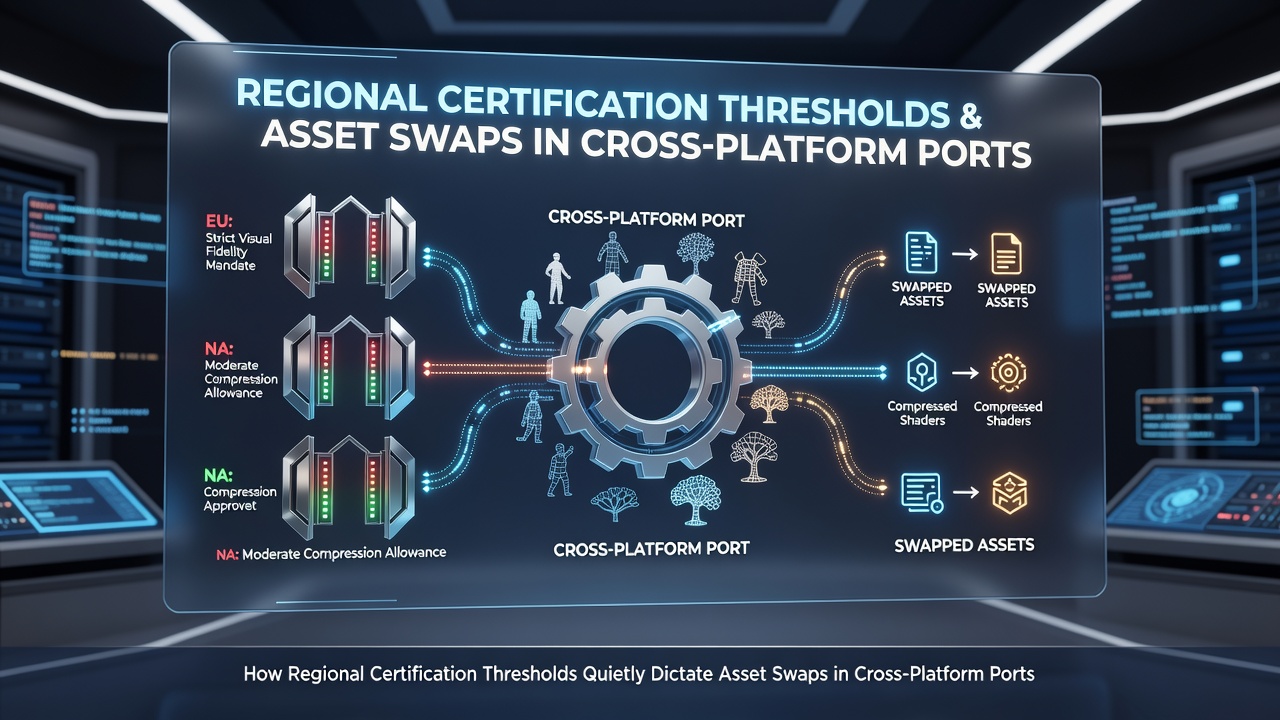
Regional certification thresholds establish specific limits on content elements such as violence intensity, sexual themes, language usage, and substance depictions, and these limits require developers to modify assets during cross-platform ports to secure approvals from bodies operating in distinct markets. Developers track these thresholds closely because each region applies its own evaluation criteria, which leads to targeted replacements of textures, models, animations, and sound files rather than wholesale redesigns of core gameplay systems.
Certification Frameworks Across Regions
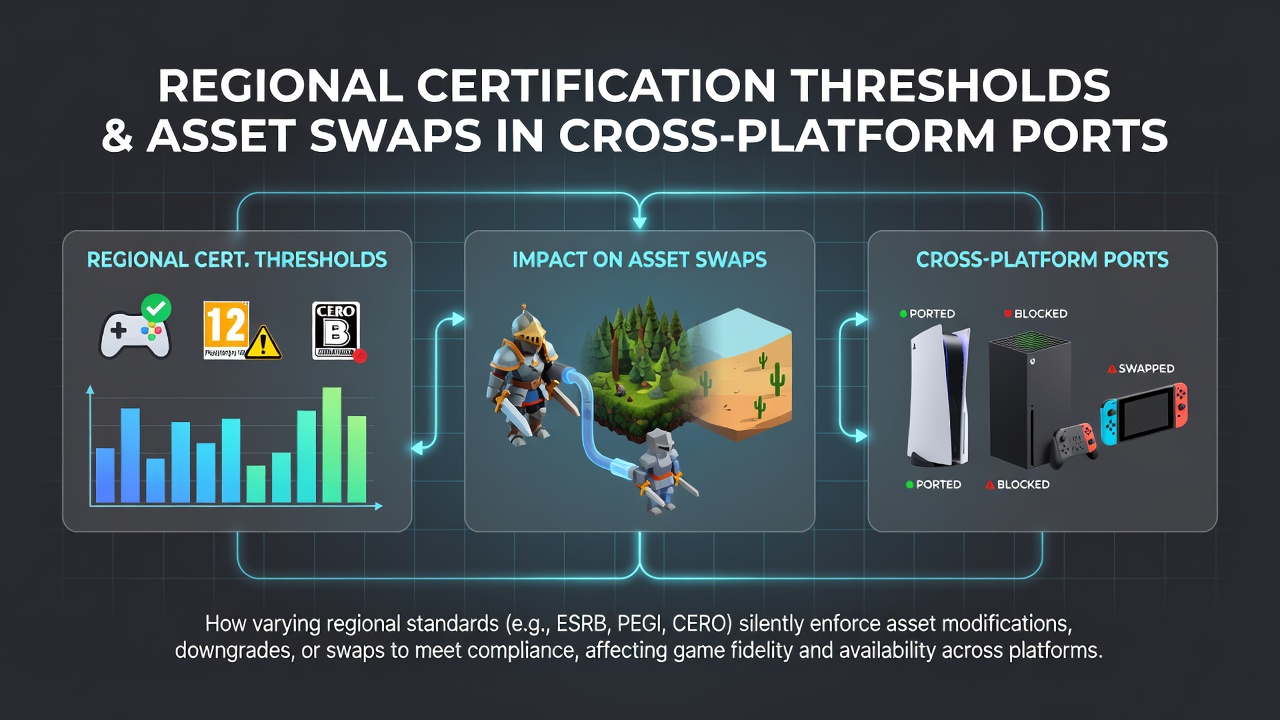
Organizations including the Entertainment Software Rating Board in the United States and the Australian Classification Board set numerical or descriptive criteria that determine acceptable asset configurations, while parallel systems in Canada and the European Union apply their own rating matrices that sometimes diverge on borderline elements like partial nudity or stylized gore. Data from industry submissions show that ports between PC and console versions frequently encounter mismatches because one platform's initial certification may allow certain particle effects that another jurisdiction flags for replacement with less intense alternatives. Researchers at academic institutions have documented how these discrepancies force asset libraries to maintain multiple variants, each calibrated to pass review without triggering higher age ratings that could restrict sales channels.
Mechanics of Asset Swaps During Ports
When a title moves from one platform to another, certification teams compare the submitted build against regional guidelines and request swaps for any asset that exceeds defined thresholds, and these requests often arrive after initial builds have already been optimized for performance on specific hardware. Teams then substitute blood splatter textures with alternative decals, adjust character clothing meshes to cover exposed areas, or replace voice lines containing profanity with edited versions that retain lip synchronization. Observers note that mobile ports introduce additional constraints because smaller screen resolutions and touch interfaces sometimes amplify the visibility of certain effects, prompting further modifications even when console versions have already cleared review. In July 2026 several cross-platform projects submitted revised asset sets to multiple boards simultaneously, illustrating how staggered certification timelines can extend development cycles by weeks or months while teams iterate on compliant replacements.
Platform-Specific Adjustments and Documentation
Console manufacturers maintain their own content policies that intersect with regional ratings, creating layered approval processes where developers must satisfy both hardware partners and government or industry raters. Figures from submission tracking services reveal that asset swap documentation now forms a standard appendix in certification packets, listing every replaced file along with justification tied to specific threshold language. Those who manage certification pipelines report that version control systems tag swapped assets with region codes so that future updates or patches automatically apply the correct variants during distribution. Mobile storefronts add another layer because automated scanning tools flag potential violations before human review occurs, which accelerates identification of assets needing modification but also increases the volume of early-stage changes compared with traditional console workflows.
Coordination Across Development Teams
Cross-platform projects assign dedicated certification liaisons who maintain matrices mapping each asset to the strictest applicable threshold across target regions, and these matrices guide decisions on whether to create neutral versions from the outset or maintain parallel asset branches. Trade association reports indicate that studios with established porting pipelines integrate certification checks into milestone reviews rather than treating them as final-stage hurdles, which reduces the number of last-minute swaps required. External partners such as localization specialists sometimes contribute to asset adjustments when cultural references intersect with rating criteria, though the primary drivers remain the numerical or categorical thresholds enforced by rating authorities. Evidence from completed ports shows that early identification of high-risk assets correlates with shorter overall certification timelines across multiple jurisdictions.
Conclusion
Regional certification thresholds continue to shape asset management practices in cross-platform development by requiring systematic identification and replacement of non-compliant elements before distribution can proceed, and developers respond by embedding these considerations into asset pipelines and documentation workflows. The interplay between different rating systems and platform policies produces a landscape where asset variants proliferate yet remain traceable through structured version control, allowing titles to reach diverse markets while satisfying each region's defined content limits.