Player Milestone Tracking and Its Role in Directing Future Content Development for Cross-Generation Titles
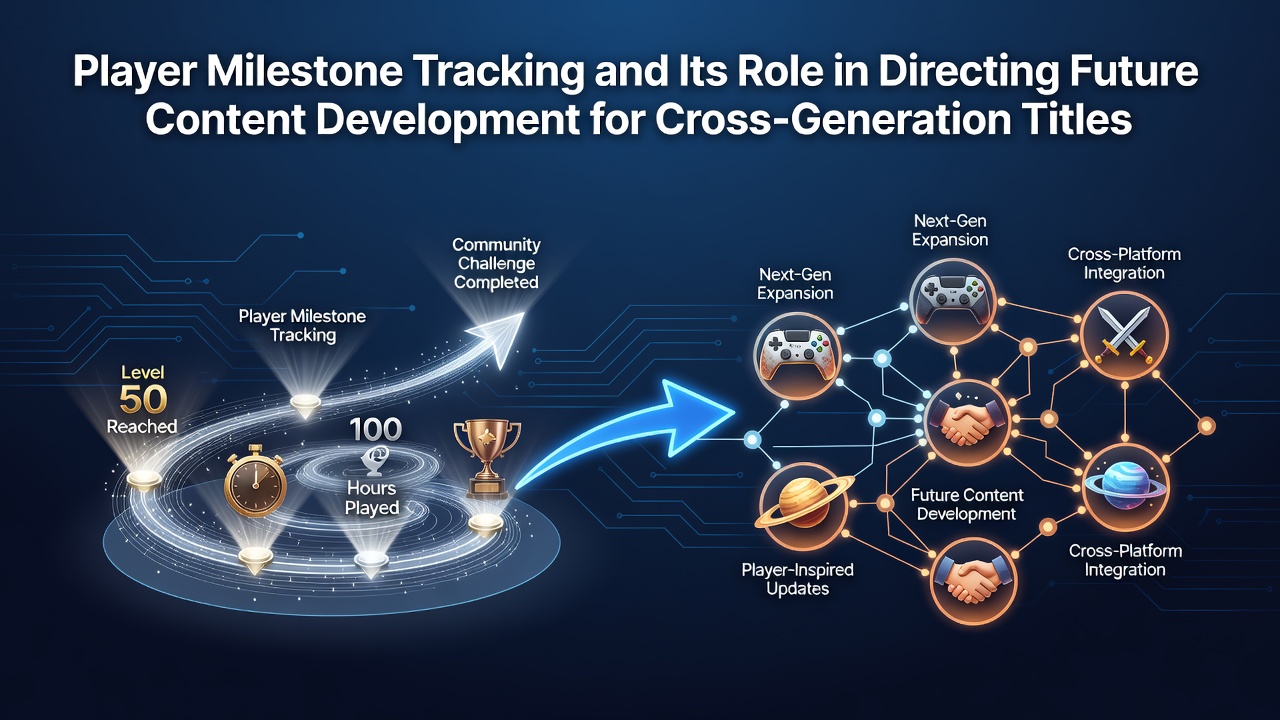
Player milestone tracking collects detailed records of achievements, progression points, session durations, and completion rates across multiple hardware generations, while developers analyze these patterns to prioritize updates that maintain engagement when titles transition from older consoles to newer platforms or PC environments. Data collection begins at launch and continues through patches, which creates continuous feedback loops that inform decisions about new levels, mechanics, and modes. Researchers at industry conferences note that this approach has grown more sophisticated since the mid-2010s, as cross-generation releases became standard practice for major publishers seeking extended revenue cycles.
How Milestone Data Is Gathered and Processed
Telemetry systems embedded in game engines log every significant player action, from reaching a story checkpoint to mastering a multiplayer objective, and these logs aggregate into centralized databases that studios access in real time. Engineers segment the information by hardware type, which reveals whether players on previous-generation consoles interact differently with core systems compared to those on upgraded hardware. According to reports from the Entertainment Software Association, studios now process billions of such data points annually to identify friction points that reduce retention across generational boundaries. Teams apply machine learning models that cluster similar player behaviors, allowing designers to spot emerging trends weeks before they appear in sales figures or review aggregates.
Influence on Content Prioritization for Multi-Platform Releases
Developers examine milestone completion rates to decide which features receive expanded support in subsequent updates, and they often allocate resources toward mechanics that show high engagement on legacy hardware while planning enhanced versions for newer systems. One studio that managed a long-running action franchise discovered through milestone analysis that players consistently revisited exploration side activities even after main story completion, prompting the addition of new regions that scaled across console generations without requiring full engine overhauls. Such decisions rely on statistical correlations rather than anecdotal feedback, and they help teams balance development costs with player expectations during extended support periods. Data from June 2026 industry briefings indicated that several titles adjusted their roadmaps after milestone tracking highlighted underused cooperative elements, leading to targeted expansions that improved cross-platform parity.
Case Examples from Recent Cross-Generation Projects
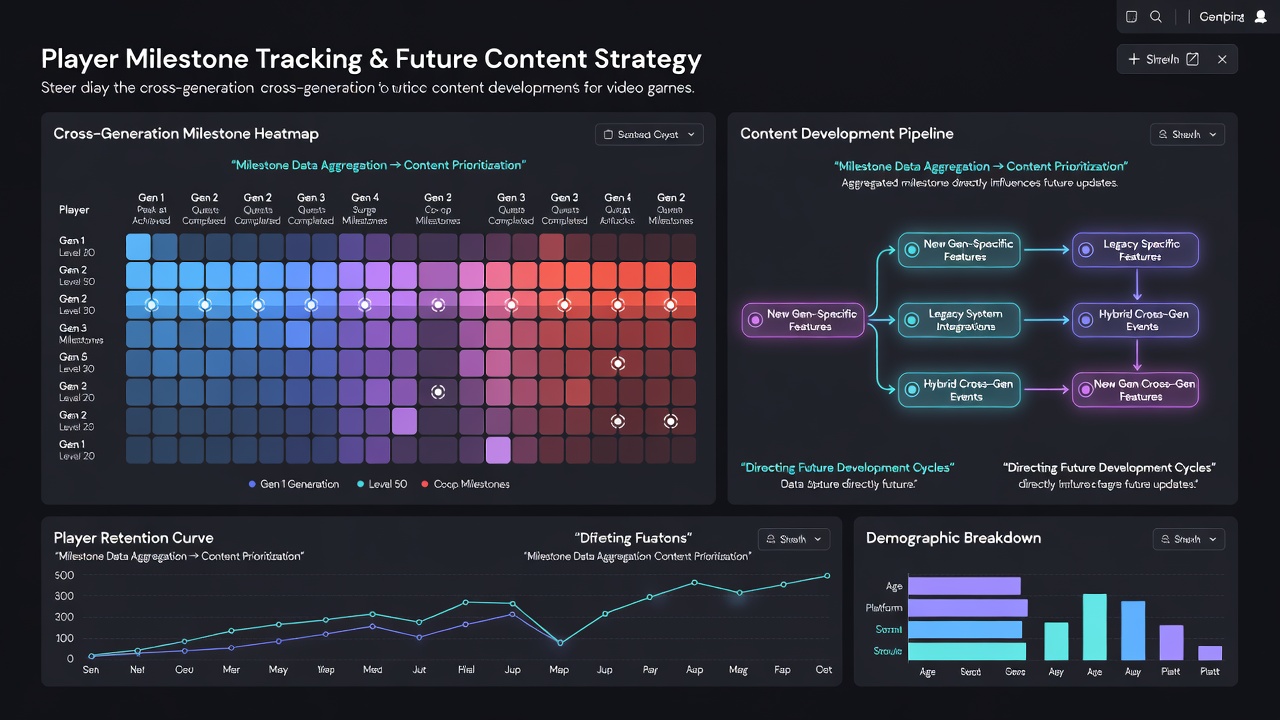
Take one development group that handled a persistent open-world title originally built for eighth-generation consoles; milestone tracking showed that endgame activities retained players on newer hardware at higher rates, which guided the creation of additional high-level challenges released simultaneously across platforms. Another project involving a narrative-driven series used progression heatmaps to identify chapters where drop-off occurred most sharply on older systems, resulting in optional quality-of-life patches that carried forward into ninth-generation versions. Observers note that these adjustments frequently occur during mid-cycle updates, when studios have accumulated enough longitudinal data to make informed calls about future seasons or expansions. External validation comes from academic analyses, including a University of Melbourne study on digital game longevity that examined how milestone patterns correlate with sustained player investment across hardware transitions.
Challenges in Applying Data Across Generational Divides
Hardware differences introduce variables such as load times, input latency, and graphical fidelity that can skew milestone interpretations, and analysts must normalize datasets before drawing conclusions about content viability. Privacy regulations in multiple regions require anonymization protocols that preserve analytical utility while complying with data protection standards, which adds layers of processing before insights reach design teams. Studios also contend with incomplete datasets when players migrate between platforms, since account linking remains inconsistent across services. Despite these hurdles, iterative refinement of tracking tools has improved accuracy, with many teams now incorporating hardware-specific benchmarks into their milestone evaluations.
Long-Term Implications for Industry Practices
Continued reliance on milestone tracking encourages publishers to design modular content that ports more easily between generations, while reducing the risk of investing in features that fail to resonate with core audiences. Trade organizations such as the Interactive Games & Entertainment Association in Australia have documented how aggregated industry data informs broader strategies around live-service sustainability. This practice also supports more precise allocation of marketing budgets, since milestone-derived insights help predict which updates will drive re-engagement campaigns. Over time, the approach fosters tighter integration between analytics departments and creative teams, ensuring that future content decisions rest on observable player behavior rather than assumptions.
Conclusion
Player milestone tracking supplies the empirical foundation that guides content evolution for titles spanning multiple console generations, and its systematic application continues to shape development pipelines at studios worldwide. By converting raw progression statistics into actionable priorities, teams maintain relevance across hardware shifts while managing resources efficiently. The methods refined through ongoing projects demonstrate measurable impacts on retention metrics and update strategies, establishing a framework that other developers adopt as cross-generation releases remain central to the market.