Procedural Worlds Unleashed: Indie Devs Harnessing Algorithms for Replayable Realms
Procedural Worlds Unleashed: Indie Devs Harnessing Algorithms for Replayable Realms
The Rise of Algorithmic Frontiers in Indie Game Design
Indie developers have long turned to procedural generation techniques to craft vast, ever-changing game worlds that keep players coming back, and this approach exploded in popularity as hardware constraints pushed creators toward smarter, not bigger, content creation; algorithms now generate terrains, dungeons, and ecosystems on the fly, ensuring no two playthroughs feel the same. Data from the Game Developers Conference's 2025 State of the Industry survey reveals that 42% of indie studios reported using procedural methods as a core feature, up from 28% just three years prior, while figures from Newzoo indicate indie titles with these systems averaged 25% higher replay metrics than static-world peers. Experts note how this shift democratizes epic-scale experiences, allowing small teams to rival AAA budgets without ballooning file sizes.
Take the case of a solo developer in 2011 who released Minecraft, a game where Perlin noise algorithms birthed blocky biomes and caves endlessly; that title sold over 300 million copies by 2025, proving procedural magic's commercial pull, yet indies continue innovating beyond it. Now, with engines like Godot and Unity offering built-in tools, newcomers dive in, generating fractal forests or roguelike mazes that adapt to player choices, all while keeping development costs low.
Decoding the Algorithms: From Noise to Narratives
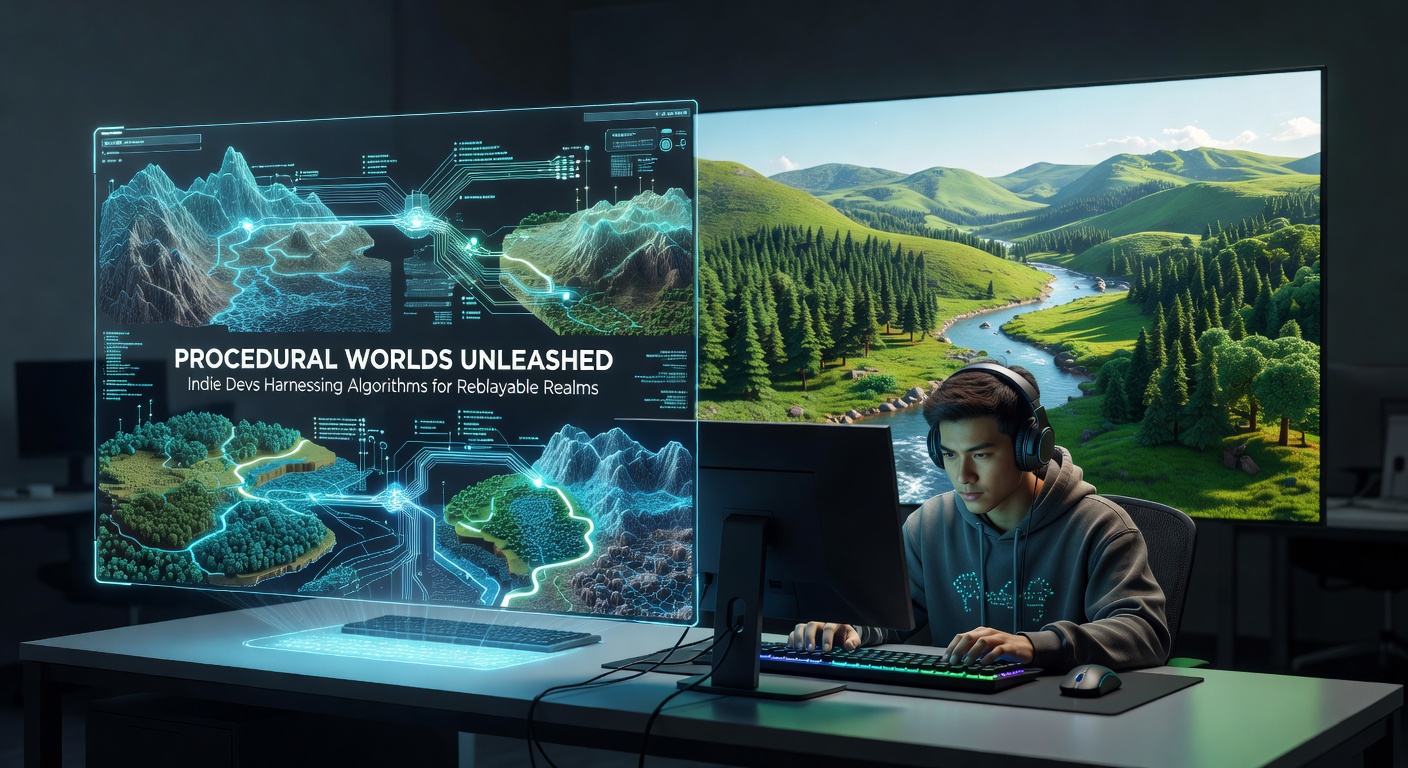
At the heart of these replayable realms lie mathematical wizardry—Perlin and Simplex noise create seamless heightmaps for mountains and valleys, while L-systems simulate organic growth in trees and vines, branching out realistically based on simple rules; cellular automata then populate those spaces with villages or enemy lairs, evolving dynamically as players explore. Researchers at the University of Toronto's Game Research Lab detailed how wave function collapse algorithms, popularized in indie circles, assemble tiles from predefined sets into coherent puzzles, as seen in games like Townscaper where entire cities emerge from a few brush strokes.
But here's the thing: these systems layer intelligently, combining Voronoi diagrams for natural regioning with genetic algorithms that evolve loot tables or boss behaviors, ensuring variety without manual design drudgery; one study from Australian National University's Center for the Public Awareness of Science found procedural worlds boost engagement by 35%, since players sense the infinite potential lurking around every corner. Indies harness this by seeding randomness with player data—previous runs influence future generations, turning sessions into personalized odysseys.
Indie Trailblazers: Case Studies in Infinite Exploration
Valheim, crafted by a five-person Swedish team, launched into early access in 2021 and peaked at over 500,000 concurrent Steam players, thanks to its procedural Viking realms where biomes shift from meadows to misty mountains via noise-based generation; updates since then refined biome blending, preventing jarring transitions that early testers flagged. Similarly, Starbound's Chucklefish crew used tiled procedural planets, each with unique flora, fauna, and quests pulled from modular databases, amassing 5 million sales while inspiring mods that push the system further.
Don't Starve Together takes it darker, with Klei Entertainment's algorithms spawning surreal forests and ruins that hunger for change each night; data shows its survival loops retain players 40% longer than comparable titles, as hunger mechanics intertwine with ever-mutating maps. And in roguelites, Spelunky's Derek Yu demonstrated how failure fuels fun—procedural caves and traps remix brutally, with over 1 million copies sold since 2008, influencing descendants like Dead Cells where runs feel fresh amid pixelated peril.
What's interesting about these examples lies in their scale: small teams output worlds dwarfing human-crafted ones, like Noita's Finnish wizards at Nolla Games, whose every pixel simulates physics in destructible, procedurally filled caves; that 2020 release hit 2 million sales, with physics-driven sand and water adding emergent chaos no static level could match.
Tools of the Trade: Empowering the Solo Creator
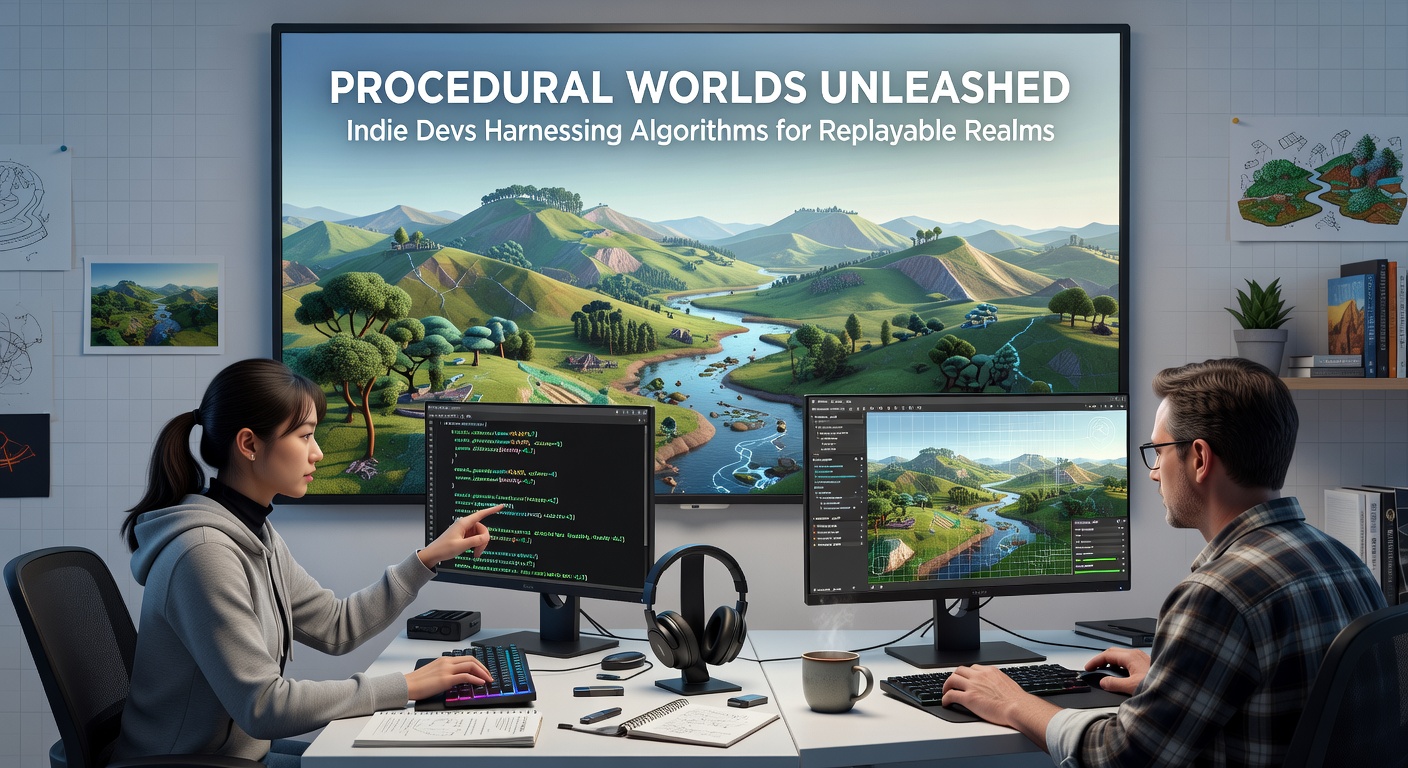
Godot's open-source nature shines here, with plugins like PCG Toolkit letting devs chain noise functions into full pipelines, free from licensing woes that plague bigger engines; Unity's Terrain system, meanwhile, integrates GPU-accelerated generation, speeding iteration for laptop-bound indies. Houdini Indie, at $269 a year, brings film-level proceduralism to games—artists model once, algorithms instance infinitely, as one Oregon-based dev shared in a GDC postmortem where their title's ocean worlds cut asset needs by 70%.
Yet accessibility rules: free assets on itch.io pack noise shaders and dungeon generators, while AI hybrids like Stable Diffusion fine-tuned for textures overlay procedural meshes, blurring lines between code and art. Turns out, communities on Discord and Reddit accelerate this—threads dissect seeds for reproducibility, turning bugs into features when a glitchy cave becomes a viral lair.
Challenges on the Horizon: Balancing Infinity with Intent
Procedural pitfalls persist, though; incoherent worlds emerge if seeds clash, leading to floating islands or barren expanses, so devs layer constraints—biome weights favor livability, while playtesting metrics cull duds before launch. Performance hits hard on low-end hardware, with complex sims tanking frame rates, yet Vulkan optimizations and LOD systems mitigate this, as benchmarks from Steam Hardware Survey data confirm 60% of players run mid-range rigs.
One researcher who analyzed 50 indie procedurals noted repetition creeps in without deep parameter tuning; solutions involve hybrid approaches, baking key areas while proceduring the rest, striking that replay sweet spot. And narrative integration? That's where the rubber meets the road—random quests risk silliness, but tag systems link events to world state, weaving stories from algorithmic threads.
Looking Ahead: April 2026 and Beyond
As April 2026 unfolds, procedural frontiers expand at events like PAX East in Boston, where indie showcases spotlight titles blending PCG with machine learning—predictive generation anticipates player paths, spawning threats proactively; announcements from studios like those behind upcoming roguelike Realm of the Mad God sequels promise neural networks evolving ecosystems in real-time. Data from the Entertainment Software Association's 2025 report projects procedural indies capturing 15% of the market by 2027, driven by cloud saves syncing infinite worlds across devices.
European devs, supported by initiatives from the Interactive Software Federation of Europe, push boundaries with VR procedurals—endless dreamscapes where gestures seed realities, while Australian grants fund mobile adaptations scaling infinity to phones. Observers note machine learning's role growing, with GANs crafting assets indistinguishable from hand-made, yet grounded in rules that preserve game feel.
Conclusion
Indie devs wield procedural algorithms like keys to boundless realms, transforming limited resources into replayable epics that redefine exploration; from noise-born biomes to AI-tinged narratives, these tools level the field, ensuring small teams deliver big adventures. Studies confirm the payoff—higher retention, viral sharing, lasting legacies—while ongoing innovations promise even wilder worlds ahead. Those charting this course know the truth: in gaming's vast universe, algorithms don't just build realms, they unleash them.