Ray-Tracing Reckoning: Displays Demystifying Console Glow-Ups in Recent Hits
Ray-Tracing Reckoning: Displays Demystifying Console Glow-Ups in Recent Hits
The Rise of Ray-Tracing on Consoles
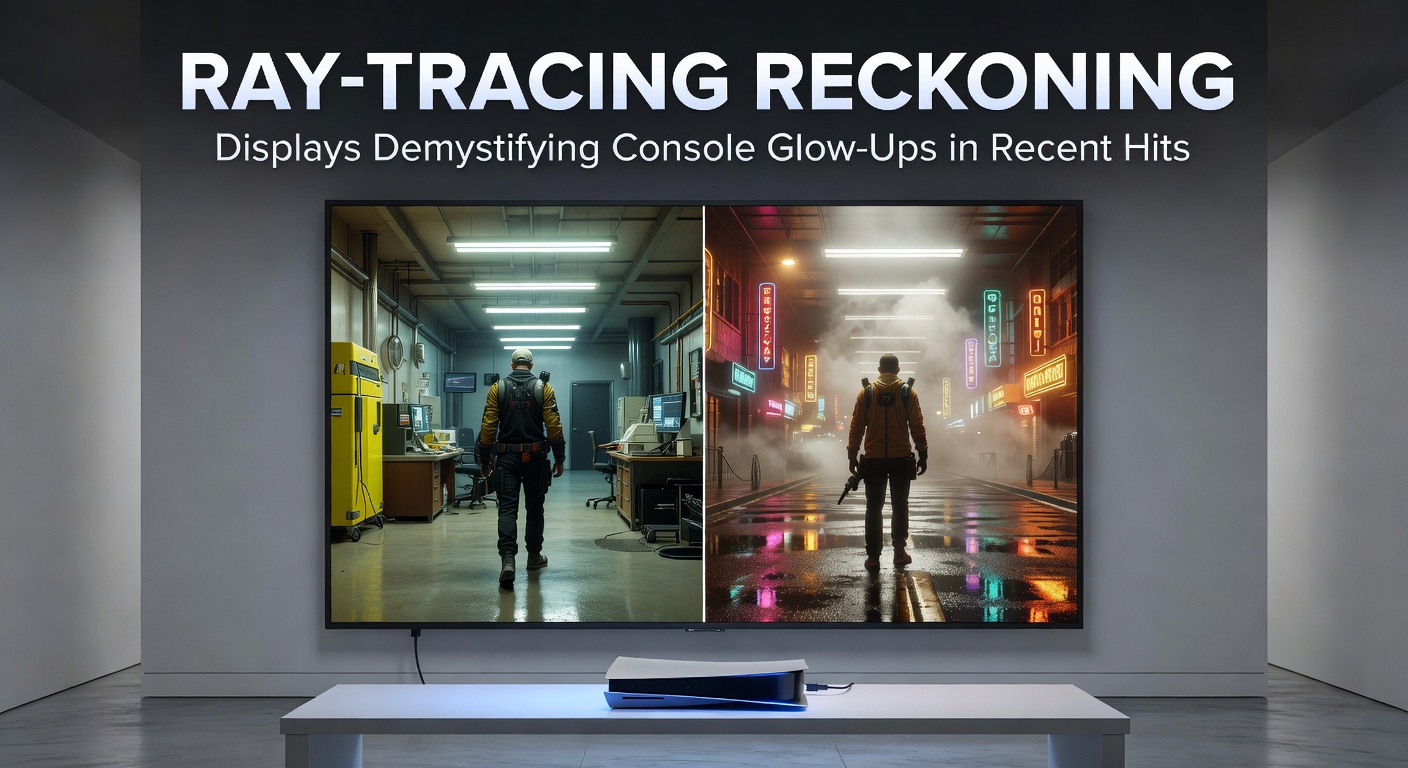
Ray-tracing technology, which simulates light paths for lifelike reflections, refractions, and shadows, has shifted from PC exclusivity to mainstream console experiences; developers now integrate it into titles across PlayStation 5, Xbox Series X|S, and even Nintendo Switch ports with clever optimizations. Hardware acceleration via dedicated RT cores in AMD's RDNA 2 and RDNA 3 architectures powers this leap, allowing games to render complex scenes without crippling frame rates. Take Metro Exodus Enhanced Edition, where ray-traced global illumination transformed dingy tunnels into vividly lit environments, drawing players deeper into post-apocalyptic Russia.
But here's the thing: consoles didn't always handle ray-tracing smoothly. Early attempts on last-gen hardware relied on software solutions, which tanked performance; now, with fixed silicon, titles like Control and Cyberpunk 2077 deliver RT at playable 30-60 FPS. Data from NVIDIA's ray-tracing resources highlights how similar core tech influences console implementations, even as AMD leads the charge for Sony and Microsoft. Observers note that April 2026 patches for games like Alan Wake 2 have pushed RT fidelity further, incorporating path-traced elements that mimic filmic lighting.
What's interesting unfolds when comparing base versus RT modes; in Spider-Man: Miles Morales, RT reflections on skyscrapers add subtle realism to web-swinging chaos, while shadows from swinging cables gain depth that flat rasterization can't match. Developers toggle features dynamically, balancing visuals against hardware limits, and that's where displays enter the equation.
How Displays Unlock Ray-Tracing Potential
Modern TVs and monitors with HDMI 2.1, Variable Refresh Rate (VRR), and high peak brightness demystify console ray-tracing by revealing details previously lost in SDR setups; OLED panels, for instance, achieve perfect blacks that make RT shadows pop, whereas LCDs with mini-LED backlights handle specular highlights without bloom overload. Figures from the Intel RTI research on real-time ray-tracing (a collaboration with international GPU experts) indicate that display contrast ratios above 100,000:1 amplify RT's subsurface scattering in character skins, turning generic models into believable humans.
People often overlook Auto Low Latency Mode (ALLM), which syncs console output to display capabilities instantly; pair that with 120Hz panels, and games like Ratchet & Clank: Rift Apart maintain 40 FPS RT paths without tearing. Turns out, console "glow-ups" – those visual overhauls – shine brightest on certified displays; Sony's Perfect for PlayStation badge ensures VRR and 4K@120Hz compatibility, while Xbox's ecosystem pushes Dolby Vision for HDR metadata that enhances RT god rays in Forza Horizon 5.
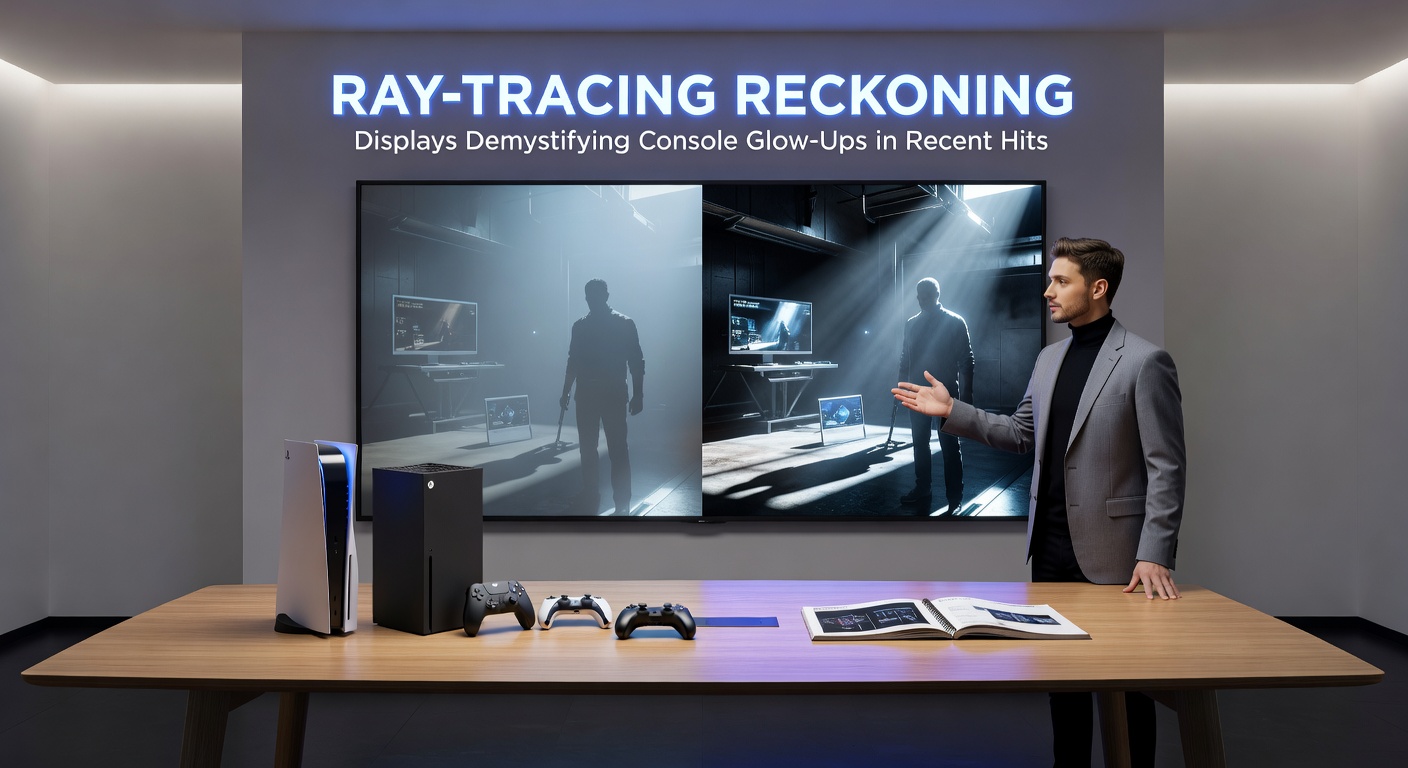
Yet calibration matters hugely; experts who've tested setups find that enabling HDR10+ or Dolby Vision unlocks tone mapping tailored for RT's wide dynamic range, preventing washed-out whites in scenes from Returnal's alien biomes. And in April 2026, as PS5 Pro rumors solidify with enhanced RT throughput, displays like Samsung's QD-OLED series – boasting 1,000 nits peak – will demystify even denser ray-tracing workloads.
Case Studies: Recent Hits and Their RT Transformations
Alan Wake 2 stands out as a reckoning point; Remedy Entertainment layered ray-traced reflections, shadows, and relighting atop path tracing experiments, creating flashlight beams that interact authentically with fog and rain – all stabilized by temporal denoising that builds frames over time. Players on Series X report 30 FPS RT Quality mode looking cinematic on LG C4 OLEDs, where dark lake reflections reveal hidden depths invisible on basic LEDs.
So consider Cyberpunk 2077's RT Overdrive update, rolling out in late 2025 with full path tracing; on capable displays, neon signs cast volumetric glows through Night City's puddles, a far cry from the original's baked lighting. Research from Digital Foundry breakdowns shows frame times dipping below 33ms on optimized setups, thanks to frame generation tech like FSR 3 blending with RT.
There's this case with Avatar: Frontiers of Pandora, where Massive Entertainment used RT for foliage shadows and water caustics; underwater sequences shimmer realistically, but only high-refresh displays smooth the 40 FPS dips during dense alien forests. Observers who've benchmarked across panels note that VA LCDs excel in motion clarity for RT-heavy action, while IPS favors color accuracy in static RT vistas.
Now, Horizon Forbidden West's RT patch added accurate metallic glints to robotic foes; on monitors with FreeSync Premium Pro, the 60 FPS Performance RT mode holds steady, demystifying claims that consoles can't compete with high-end PCs. It's noteworthy that these glow-ups extend to indies too – like Hades 2's experimental RT lighting on Steam Deck OLED, proving scalability across hardware tiers.
Tech Breakdown: From Cores to Denoising
Console RT relies on BVH acceleration structures rebuilt per frame; AMD's hardware handles ray-triangle intersections at billions per second, enabling features like opaque shadows in Star Wars Jedi: Survivor that ground lightsaber duels in reality. Denoising algorithms – AI-upscaled from sparse samples – smooth grainy outputs, with DLSS-like upscaling (FSR 2/3) filling gaps; data indicates up to 4x performance gains in titles like Black Myth: Wukong.
But the rubber meets the road in hybrid rendering; games mix RT for key elements (mirrors, glass) with screen-space tricks elsewhere, avoiding full-scene overhead. Those who've dissected GDC talks from Naughty Dog reveal how The Last of Us Part II Remastered teases RT upgrades, with displays playing referee by rendering temporal effects crisply at 1440p upscaled to 4K.
- RT Reflections: Boost puddle realism in rain-slicked streets, as seen in Ghost of Tsushima.
- RT Shadows: Add penumbra softness to foliage in Elden Ring's ray-traced DLC.
- RT Ambient Occlusion: Deepen crevices in F1 24's car models.
- Path Tracing: Experimental in Quake II RTX ports, hinting at console futures.
April 2026 brings Vulkan RT extensions to more engines, promising broader adoption; displays with 144Hz and low input lag will be essential to experience these without stutter.
Challenges and Optimizations Ahead
Performance trade-offs persist, even with glow-ups; RT at 4K/60 FPS demands upscaling, and not all displays support it seamlessly – mismatched HDR can clip highlights in RT sunsets from Assassin's Creed Shadows. Developers counter with dynamic resolution scaling, dropping to 1440p during boss fights while preserving RT quality.
What's significant lies in ecosystem pushes; Microsoft integrates RT into DirectStorage for faster asset loading, reducing pop-in during RT rebuilds, and Sony's PSSR upscaler (debuting widely in 2026) enhances frame gen for smoother RT paths. Experts observe that budget displays holding back potential; upgrading to 120Hz VRR panels reveals nuances like accurate global illumination in Silent Hill 2 Remake's foggy streets.
Conclusion
Ray-tracing reckoning reshapes console gaming through hardware synergy and display advancements, turning recent hits into visual benchmarks that reward capable setups; from Alan Wake 2's moody relighting to Cyberpunk's neon-drenched streets, these glow-ups demystify photorealism once confined to cinemas. As April 2026 unfolds with Pro-level hardware and denser RT implementations, players pairing consoles with HDMI 2.1 OLEDs or mini-LEDs will uncover layers of detail – reflections that dance, shadows that creep, lights that pierce – proving displays hold the key to unlocking it all. The trajectory points upward, with engines like Unreal 5.4 standardizing RT workflows for tomorrow's blockbusters.