Seasonal Release Clusters Reshaping Hardware Bundle Recommendations Across Console Generations
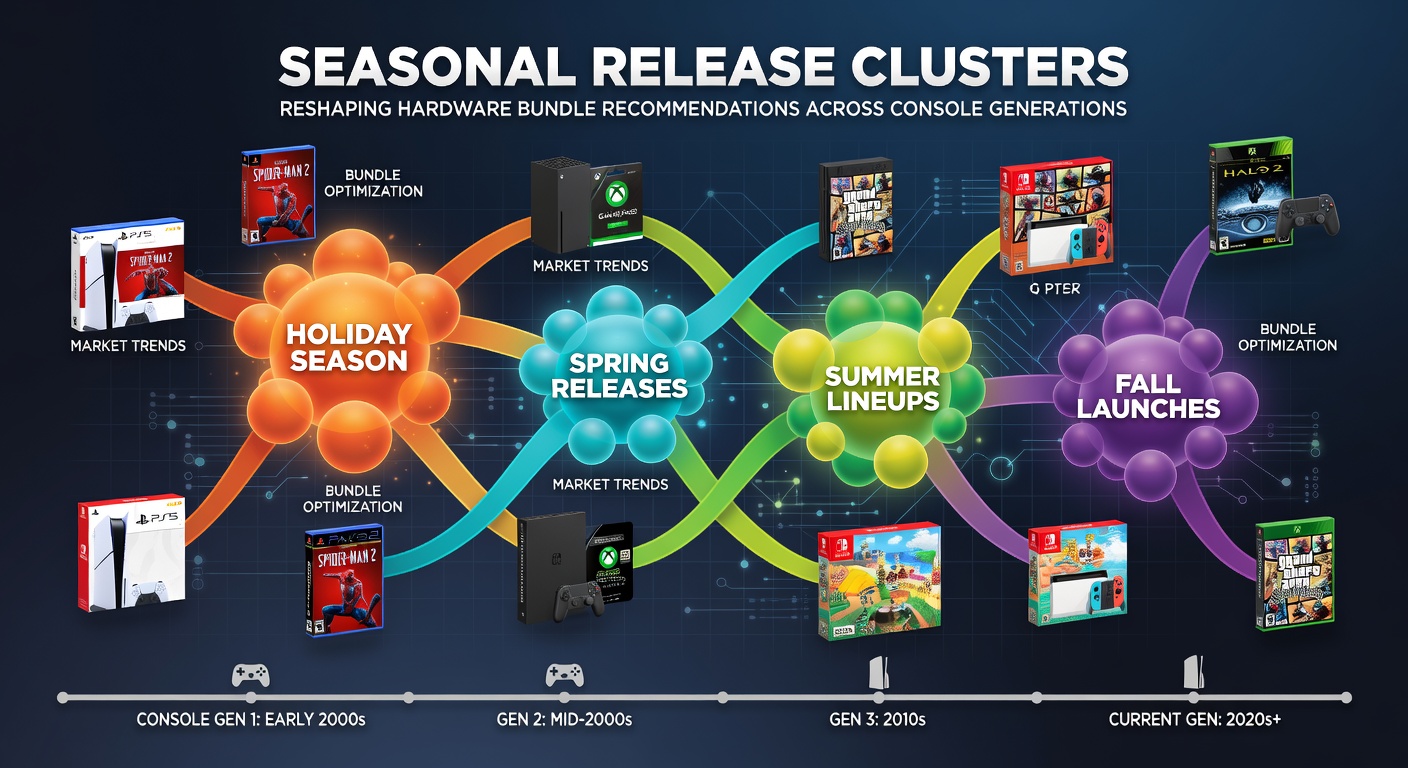
Seasonal release clusters have emerged as a defining pattern in the console industry where multiple high-profile titles launch within concentrated windows such as fall and holiday periods, and these groupings directly influence how retailers and manufacturers structure hardware bundles across successive generations from the PlayStation 2 era through current systems. Data from industry tracking services show that publishers align major releases to maximize visibility during peak shopping seasons while hardware providers respond by pairing consoles with game selections that match those temporal concentrations.
Patterns Across Earlier Console Generations
Observers note that the transition from sixth-generation hardware to seventh-generation platforms saw initial experiments with seasonal bundling where fall clusters of action titles prompted Xbox 360 and PlayStation 3 packages that included shooters and racing games timed for October launches. Research from the Entertainment Software Association indicates that bundle recommendations shifted when multiple franchises released sequels within the same quarter and retailers adjusted recommendations to feature those titles alongside new consoles to capture combined sales spikes.
By the eighth generation manufacturers refined this approach as data revealed stronger correlations between clustered releases and hardware uptake, and Nintendo incorporated family-oriented titles into Wii U bundles during periods when several platform exclusives arrived close together. European trade reports from the Interactive Software Federation of Europe documented how these clusters affected inventory planning since retailers in multiple regions prepared bundles months ahead based on announced release calendars.
Current Shifts in Ninth-Generation Systems
PlayStation 5 and Xbox Series X bundles now frequently rotate recommendations in response to dense release periods, and analysts tracking sales through 2025 found that summer clusters of multiplayer titles led some retailers to suggest different accessory pairings than those promoted during winter launch windows. In June 2026 several publishers scheduled overlapping updates for live-service games across both platforms which prompted renewed bundle adjustments that paired digital subscription incentives with hardware rather than physical media.
Canadian market data collected by Statistics Canada shows that consumer purchasing during these clustered periods favors bundles containing at least two games from the same seasonal wave, and manufacturers have responded by updating their recommendation algorithms to prioritize titles with shared release timing. This adjustment appears across both premium and entry-level console variants where bundle contents change quarterly to align with observed cluster density.
Influence on Retailer and Manufacturer Strategies
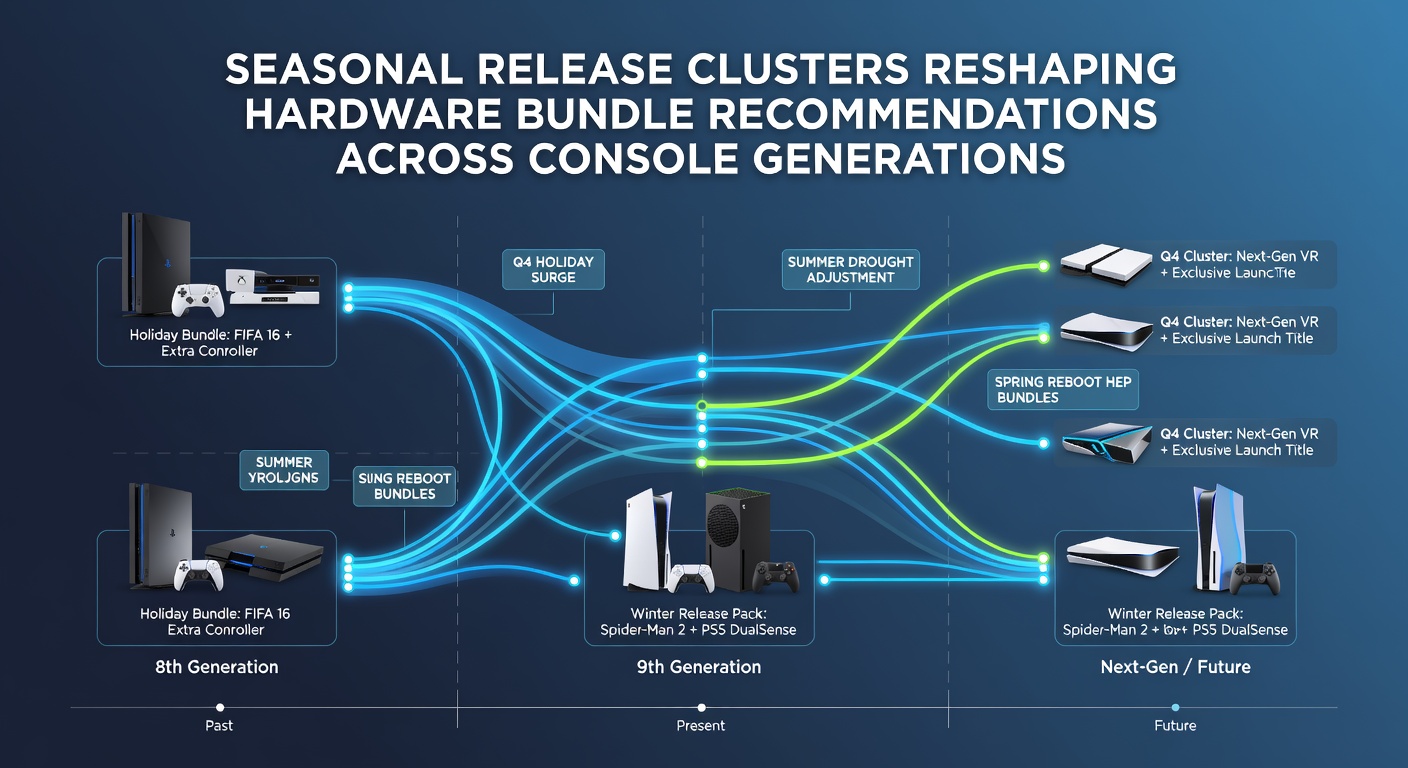
Retail chains now monitor announcement calendars from major publishers to predict cluster formation and adjust inventory accordingly, while hardware makers incorporate these forecasts into their own recommendation engines that suggest bundles based on projected seasonal overlaps. Figures from the Australian Bureau of Statistics reveal similar patterns in that market where holiday clusters of role-playing games have consistently driven higher attachment rates for console bundles containing those specific titles.
Academic studies published through university research programs have examined how these seasonal concentrations affect long-term hardware adoption rates, and the findings indicate that generations experiencing tighter release clusters show accelerated bundle uptake during the first two years after launch. Manufacturers therefore maintain flexible bundle portfolios that allow rapid swaps when multiple titles converge on a single quarter, ensuring recommendations remain aligned with actual release schedules rather than fixed annual templates.
Regional Variations in Bundle Adjustments
Markets in Asia-Pacific regions demonstrate distinct responses to seasonal clusters compared with North American patterns, and trade data from regional gaming associations highlight how localized release timing influences which games appear in recommended bundles. Publishers sometimes stagger launches to create secondary clusters that affect hardware recommendations differently across borders, and retailers adapt by maintaining region-specific bundle options that reflect those variations.
Platform holders have introduced digital bundle variants that change more frequently than physical packages, and this flexibility allows recommendations to track cluster movements in real time as new titles enter the seasonal window. Observers tracking these developments note that subscription services integrated into bundles have become common additions during periods when several online-focused games launch together.
Conclusion
Seasonal release clusters continue to drive iterative changes in how hardware bundles are recommended across console generations, and ongoing data collection from multiple markets supports continued refinement of these strategies. Retailers and manufacturers maintain alignment with publisher calendars to ensure bundle contents reflect the temporal concentrations that characterize modern release schedules.