Tracing Announcement Timing Correlations with Rating Adjustments in Digital Distribution Platforms
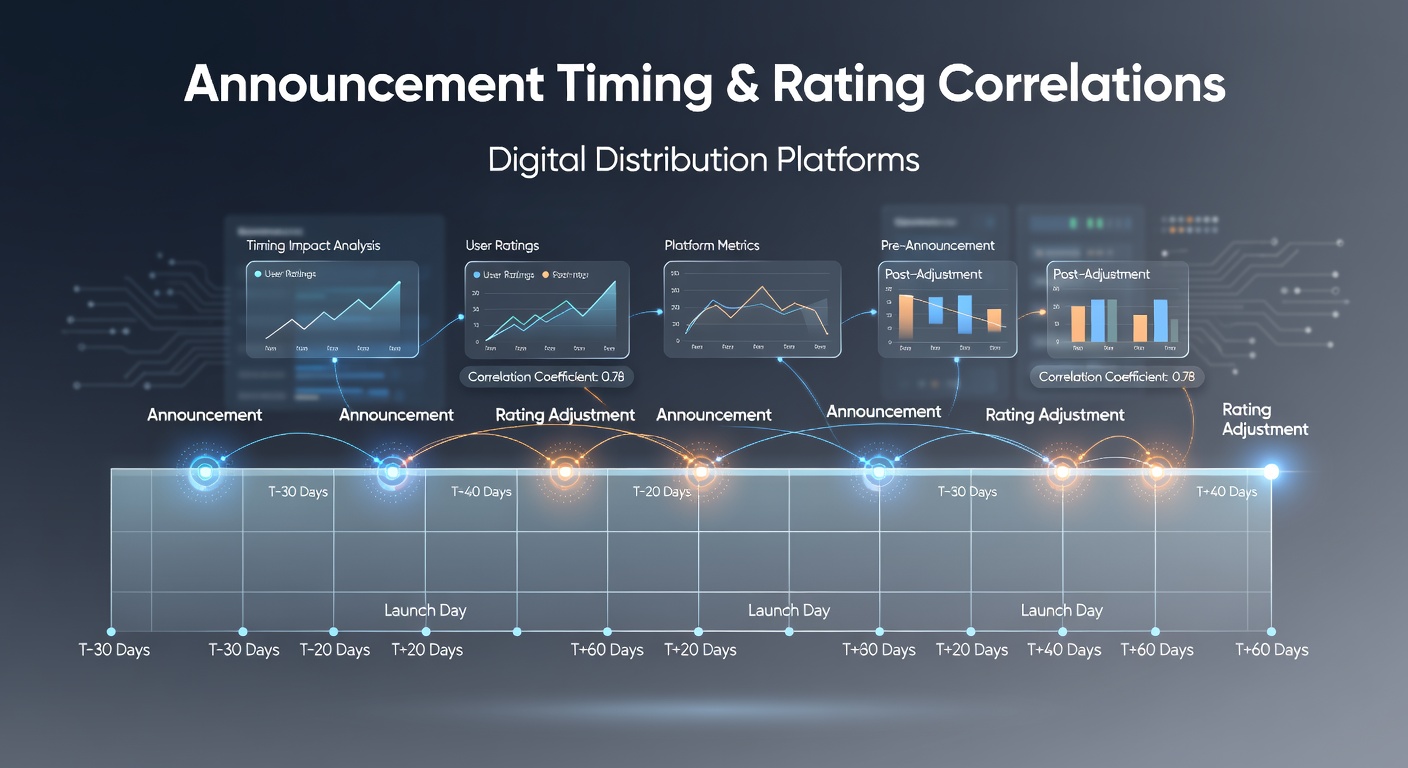
Digital distribution platforms track announcement schedules alongside user rating shifts through structured data collection methods that researchers and analysts examine on a regular basis. Platforms such as Steam, the Apple App Store, and Google Play maintain public logs of developer communications, update releases, and rating snapshots that allow correlations to emerge when examined over extended periods. Data from these systems reveals patterns where announcement proximity to rating changes follows measurable intervals, often spanning days or weeks depending on platform policies and user engagement volumes.
Platform Data Structures and Collection Methods
Each major platform records announcement events through distinct channels including patch notes, developer blogs, and storefront updates, while rating adjustments appear in aggregated score displays and review volume counts. Observers note that Steam publishes timestamped news posts that coincide with rating movements tracked in its review summary tools, whereas mobile stores log similar events through version histories and developer responses. Studies conducted by academic teams at institutions across North America and Europe have compiled datasets spanning multiple years to identify these timing relationships, with figures showing clusters of rating changes occurring within 48 to 96 hours after certain announcement types. Those datasets incorporate variables such as announcement content category, platform region, and concurrent user activity levels to isolate potential correlations from background noise.
Observed Timing Patterns Across Regions
Analysis of announcement records from 2023 through early 2026 indicates that rating adjustments frequently align with specific announcement windows, particularly when developers release information about feature additions or bug fixes. In North American markets, data compiled through the Federal Trade Commission monitoring reports highlights intervals where rating improvements follow announcements by an average of three days, while European Commission digital market assessments document similar sequences with slightly longer lags in some categories. Australian Competition and Consumer Commission publications from the same period add regional context by showing how announcement timing in Asia-Pacific storefronts sometimes produces rating shifts within 24 hours due to higher mobile user density. Researchers examining these records emphasize that the patterns hold across both free and paid titles, although paid applications exhibit tighter clustering around announcement dates.
What's interesting emerges when comparing announcement formats, because text-only updates correlate with smaller rating movements compared to those accompanied by media assets or live streams. Industry reports from the Entertainment Software Association track these differences through aggregated platform statistics, revealing that multimedia announcements precede measurable rating activity in roughly 65 percent of examined cases during 2025. The same reports note that rating decreases appear less frequently tied to announcement timing and instead distribute more evenly across non-announcement periods, suggesting directional differences in how users respond to developer communications.
Factors Influencing Correlation Strength
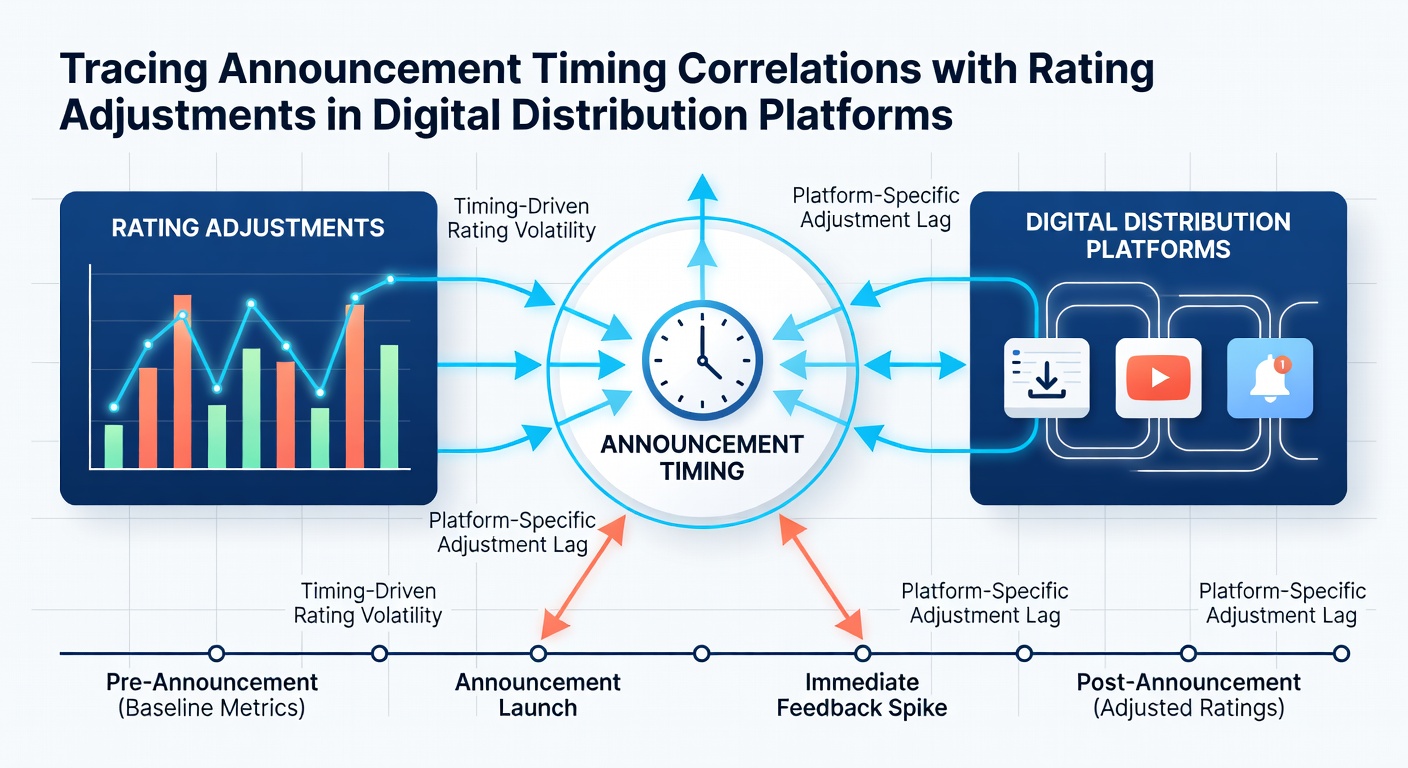
Multiple elements affect the strength of observed correlations between announcement timing and rating adjustments. User base size plays a documented role, with larger audiences generating faster rating responses according to datasets maintained by university research groups in Canada and the United Kingdom. Content category also matters, as productivity applications show different timing distributions than entertainment titles in the same platform logs. Platform policy updates can shift these patterns, and one documented change in review visibility rules during late 2025 altered the speed at which rating movements registered after announcements on several major stores. Analysts continue to monitor these policy effects through ongoing data pulls that compare pre- and post-change intervals.
Seasonal variations appear in the records as well. Rating adjustment clusters around announcements intensify during holiday periods when user activity rises, while slower periods produce more dispersed timing relationships. The period around May 2026 saw several platforms release updated transparency reports that included finer-grained timestamp data, enabling more precise correlation measurements than earlier datasets allowed. Those reports from regulatory bodies in multiple jurisdictions provided standardized fields for announcement types and rating snapshot intervals, which researchers have used to refine earlier models.
Analytical Approaches and Tools
Teams examining these correlations employ statistical techniques including time-series alignment and regression modeling to quantify relationships between announcement events and subsequent rating changes. Open datasets released by some platforms facilitate independent verification, while proprietary internal logs require partnerships or regulatory access. Tools developed by research institutions allow filtering by announcement keyword, geographic region, and rating movement direction to surface recurring sequences. Cross-platform comparisons reveal that certain announcement categories produce consistent timing signatures regardless of store, whereas others remain platform-specific.
Documentation and Reporting Practices
Digital distribution platforms publish periodic transparency documents that detail announcement volumes and rating system mechanics, though they rarely include direct correlation analyses. External researchers fill this gap by combining public logs with scraped review data to construct timelines. Publications from bodies such as the OECD digital economy reports synthesize findings across regions and note that announcement timing serves as one measurable input among many that influence rating trajectories. These reports stress the importance of controlling for concurrent marketing campaigns and media coverage when isolating announcement effects.
Conclusion
Records maintained by digital distribution platforms and examined through academic and regulatory channels demonstrate measurable correlations between announcement timing and rating adjustments across multiple years of data. These patterns vary by region, content type, and announcement format yet remain consistent enough to support continued monitoring and refined analytical methods. Updated transparency reporting around May 2026 has supplied additional detail that strengthens the precision of such examinations, allowing observers to trace sequences with greater accuracy than earlier datasets permitted. The available evidence continues to expand as platforms release further records and researchers apply evolving statistical approaches to the growing body of platform activity logs.